
On March 5, 2026, BYD unveiled the second generation of its Blade Battery, alongside a new flash-charging system. The updated platform splits the lineup into two distinct formats—Short Blade and Long Blade—each engineered for different performance and range priorities.
The Short Blade 2.0 uses cells roughly 450–580 mm in length and is built for speed. It supports a peak charge rate of 8C and a discharge rate of 16C, making it possible to go from 10% to 70% charge in about five minutes. Inside, a "Lithium-Ion High-Speed Channel" combined with a multi-level cathode particle structure improves ion flow and helps manage the heat generated by charging power reaching up to 1,500 kW. This version is aimed at 800V–1,000V platforms and plug-in hybrids.
The Long Blade 2.0, by contrast, goes all-in on energy density. It delivers 190–210 Wh/kg at the system level—about 40% higher than the first-generation Blade. Built around lithium manganese iron phosphate chemistry with a nominal voltage of 3.8V, it allows a 120 kWh pack in the Denza Z9 GT to achieve a CLTC-rated range of 1,036 kilometers.
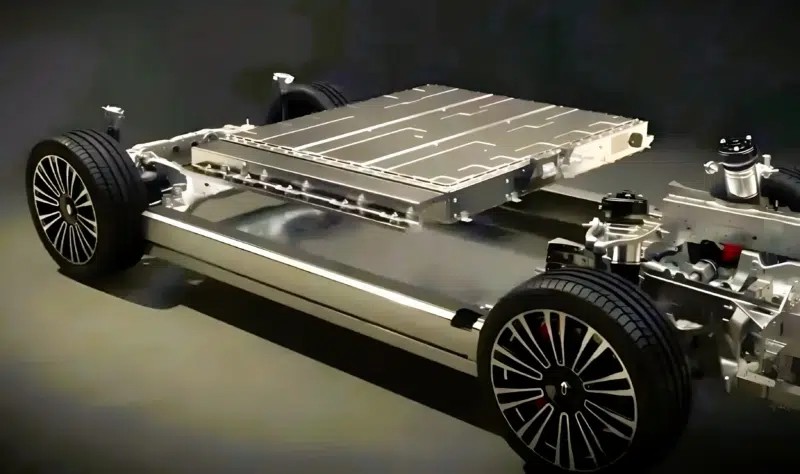
Both formats are built into an upgraded cell-to-body structure (CTB 2.0), which pushes volumetric efficiency to around 76% while cutting down on overall structural weight.
Compared to competitors like CATL's Kirin battery, the Blade 2.0 lineup offers similar range at a lower production cost. To back up the Short Blade’s 8C charging capability, BYD says it will roll out 20,000 flash-charging stations by the end of 2026, each equipped with 1,500 kW T-shaped dispensers.
The Blade 2.0 pack comes standard on the Yangwang U7—priced at ¥1.09 million (around $150,800)—and is expected to reach the Ocean series by the third quarter of 2026.
Contact Person: Miss. Kiki
| WhatsApp : | +8617763224709 |
|---|---|
| Skype : | +8617763224709 |
| WeChat : | +8617763224709 |
| Email : | kiki@lifepo4-battery.com |
