

From smartphones and electric vehicles to home energy storage systems, knowing what a battery charge really means helps you boost performance, improve safety, and extend service life. Charging is far more than just connecting a charger—it is a precisely controlled electrochemical process that restores stored energy while protecting the battery from harm.
In this comprehensive guide, you'll learn what battery charge signifies, how the charging process works, the differences between methods for various battery chemistries, and the best practices that keep your batteries running efficiently for years.
A battery charge is the quantity of electrical energy currently held inside a rechargeable battery and ready to power connected devices. The term can also describe the act of restoring that energy after the battery has been used.
Battery charge is typically measured using several different units:
- State of Charge (SOC): Percentage of energy remaining (0%–100%)
- Ampere-hours (Ah): Total electrical capacity
- Milliampere-hours (mAh): Capacity used for small electronics
- Watt-hours (Wh): Total stored energy
- Kilowatt-hours (kWh): Energy capacity for EVs and storage systems
Application | Typical Capacity |
Smartphone | 4,000–6,000 mAh |
Laptop | 40–100 Wh |
Electric Vehicle | 40–120 kWh |
Residential Energy Storage | 5–20 kWh |
Commercial BESS | 100 kWh–Several MWh |
The greater the stored charge, the longer the battery can run before needing a recharge.
Battery charging is the process of refilling a rechargeable battery with electrical energy by applying a regulated voltage and current from an external charger.
During discharge, the battery turns stored chemical energy into electricity. Charging reverses this reaction, so the battery can store energy again for later use.
In simple terms:
- Discharging: Chemical energy → Electrical energy
- Charging: Electrical energy → Chemical energy
This reversibility allows modern rechargeable batteries to handle hundreds or even thousands of charge‑discharge cycles.
A common question is: What actually happens inside a battery while it charges? The answer is rooted in electrochemistry.
Every rechargeable battery contains several key elements:
- Anode
The negative electrode where oxidation takes place during discharge and where ions return during charging.
- Cathode
The positive electrode that accepts ions during discharge and releases them during charging.
- Electrolyte
A conductive medium that lets ions travel between the electrodes but blocks direct electron flow.
- Battery Charger
A regulated power source that delivers the correct charging voltage and current while safeguarding the battery.
When a charger is connected:
1. Electrical energy flows into the battery.
2. Electrons move through the external circuit to the anode.
3. Lithium ions (or other charge carriers) migrate through the electrolyte.
4. Chemical reactions rebuild the stored energy.
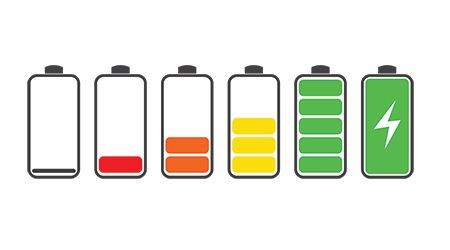
5. The battery’s State of Charge (SOC) gradually rises.
Once the battery reaches its maximum safe voltage, the charger automatically tapers the current or stops entirely to prevent overcharging.
Today’s chargers are considerably more sophisticated than simple power supplies. Modern smart chargers incorporate multiple electronic control systems that enhance both efficiency and safety.
Component | Function |
AC/DC Power Supply | Converts household AC power into DC charging power |
Voltage Regulation Circuit | Maintains a safe charging voltage |
Current Control Circuit | Adjusts the charging current throughout the cycle |
Protection System | Prevents overheating, overcharging, and short circuits |
Monitoring System | Tracks battery voltage, temperature, and SOC |
Many advanced chargers also communicate directly with a Battery Management System (BMS) to optimize charging based on battery health and operating conditions.
Different use cases demand different charging technologies.
Standard chargers supply fixed voltage and current outputs.
- Low cost
- Simple design
- Easy to operate
- Slower charging
- Lower efficiency
- Greater risk of overcharging if left unmanaged
Smart chargers automatically adapt charging parameters to the battery’s condition.
- Improved charging efficiency
- Enhanced battery protection
- Extended battery lifespan
- Automatic termination of charging
They are the recommended choice for lithium‑ion batteries, deep‑cycle batteries, and battery energy storage systems.
Fast charging technology boosts the charging current to dramatically cut charging time.
- Rapid charging
- Greater convenience
- More heat generation
- Accelerated battery aging with frequent use
- Increased demands on the battery’s thermal management
Solar chargers convert sunlight into electrical energy to charge batteries.
They are widely used for:
- Off‑grid power systems
- RVs and campers
- Outdoor gear
- Remote monitoring stations
- Portable power solutions
Different battery chemistries require different charging algorithms.
Lithium‑ion batteries dominate today’s electronics, EVs, drones, robotics, and energy storage systems thanks to their:
- High energy density
- Long cycle life
- Light weight
- Low self‑discharge
Most lithium‑ion batteries use a Constant Current/Constant Voltage (CC/CV) charging profile.
- Stage 1: Constant Current (CC) – The charger supplies a steady charging current while the battery voltage gradually rises.
- Stage 2: Constant Voltage (CV) – After reaching the target voltage, the charger holds that voltage constant while the charging current slowly decreases until charging is complete.
This approach delivers high efficiency while preventing dangerous overvoltage conditions.
Lead‑acid batteries remain common in:
- UPS systems
- Backup power
- Telecommunications
- Automotive starter batteries
They typically follow a three‑stage charging process:
- Bulk Charge – A high charging current quickly restores roughly 80% of the capacity.
- Absorption Charge – The voltage stays constant as the current gradually tapers.
- Float Charge – A reduced maintenance voltage keeps the battery fully charged without excessive overcharge.
This profile minimises sulfation and prolongs battery life.
Nickel batteries include Nickel‑Cadmium (NiCd) and Nickel‑Metal Hydride (NiMH). Common charging techniques are:
- Trickle Charging – A low continuous current keeps the battery at full charge.
- Fast Charging – A higher current reduces charging time but requires careful temperature monitoring.
Battery Type | Charging Method | Advantages | Key Considerations |
Lithium-ion | CC/CV | High efficiency, long cycle life | Sensitive to overvoltage |
Lead-acid | Bulk + Absorption + Float | Reliable and economical | Requires maintenance |
NiMH | Fast Charge + Trickle | Good overall performance | Heat management essential |
NiCd | Fast Charge + Trickle | Durable and rugged | Memory effect possible |
Sound charging practices directly affect battery safety, performance, and lifespan.
Excessive charging can cause:
- Heat accumulation
- Battery swelling
- Capacity loss
- Shortened cycle life
- Safety risks
Smart chargers and Battery Management Systems greatly reduce these dangers.
Efficient charging minimises energy lost as heat and maximises the energy stored inside the battery. Higher efficiency translates to:
- Lower electricity consumption
- Faster charging
- Better long‑term battery performance
Following correct charging procedures can noticeably increase cycle life, especially for lithium‑ion batteries that are sensitive to poor charging habits.
Pulse charging delivers brief bursts of electrical current rather than a continuous flow.
It is mainly used for maintaining lead‑acid batteries. Potential benefits include:
- Reducing sulfation
- Lower operating temperatures
- Improved charging efficiency
- Better battery recovery in some situations
For modern lithium‑ion batteries, however, pulse charging offers little advantage and is generally not recommended as a primary charging method.
Temperature greatly influences charging speed, battery health, and safety.
Cold conditions may lead to:
- Slower charging
- Higher internal resistance
- Reduced usable capacity
- Lithium plating in lithium‑ion cells
Excessive heat can result in:
- Accelerated aging
- Capacity degradation
- Cell swelling
- Increased risk of thermal runaway
For most lithium‑ion batteries, the ideal charging range is 20°C to 25°C (68°F to 77°F).
Applications operating in extreme climates often need specially engineered low‑temperature or high‑temperature lithium battery solutions.
Following these guidelines will maximise battery safety and longevity:
- Always use the charger recommended by the battery manufacturer.
- Avoid charging in extremely hot or cold environments.
- Do not repeatedly discharge lithium‑ion batteries all the way to 0%.
- Avoid leaving batteries at 100% charge for extended periods unless necessary.
- Use smart chargers with automatic charging control whenever possible.
- Replace damaged charging cables and connectors right away.
- Store batteries at roughly 40%–60% State of Charge for long‑term storage.
- Keep battery terminals clean and free of corrosion.
- Regularly inspect batteries for swelling, leakage, or physical damage.
Dependable battery charging supports a wide range of industries and technologies.
Industry | Typical Applications |
Consumer Electronics | Smartphones, laptops, tablets, wearables |
Electric Vehicles | EV battery packs and charging stations |
Renewable Energy | Residential and commercial energy storage systems |
Robotics | AGVs, AMRs, industrial robots |
Medical Equipment | Portable diagnostic devices and monitors |
Industrial Automation | Sensors, handheld tools, backup systems |
Aerospace | Emergency backup power and mission-critical electronics |
Telecommunications | Base stations and uninterrupted power systems |
Understanding what a battery charge is and how charging works is essential for getting the best performance, extending service life, and ensuring safe operation. Whether you rely on lithium‑ion, lead‑acid, or nickel‑based batteries, each chemistry calls for its own charging strategy to deliver optimal results.
Modern smart chargers, Battery Management Systems, and advanced charging algorithms have made battery charging safer and more efficient than ever. By sticking to proper charging practices, maintaining suitable charging temperatures, and choosing the right charger for your battery, you can significantly improve battery lifespan while lowering maintenance costs and strengthening overall system reliability.
Battery charge refers to the amount of electrical energy currently stored inside a battery and available to power connected equipment.
Charging supplies controlled electrical energy that reverses the chemical reactions happening during discharge, enabling the battery to store energy once again.
Yes. Most modern electronics support simultaneous charging and use, although active operation may slow down charging because some of the incoming power is consumed directly by the device.
Charging time depends on battery capacity, charger output, battery chemistry, charging algorithm, and the battery’s current State of Charge. It can range from under an hour for small gadgets to several hours for large battery systems.
Yes. An incompatible charger can deliver incorrect voltage or current, leading to overheating, shortened battery life, permanent damage, or safety hazards. Always use a charger designed for your battery type and specifications.
Welcome to contact us:
Inquire more product details from the: Battery Charger Suppliers
WhatsApp/Wechat/Skype/Mobile: +8617763224709
Email: kiki@lifepo4-battery.com
Website: www.evlithiumcharger.com
Next:800W and 1500W Sealed On Board Chargers Shipped to Pakistan
Previous:2kW RA2P00108 On Board Charger Shipped to Shenzhen, China
Contact Person: Miss. Kiki
| WhatsApp : | +8617763224709 |
|---|---|
| Skype : | +8617763224709 |
| WeChat : | +8617763224709 |
| Email : | kiki@lifepo4-battery.com |
