

Correct charging is vital for the performance, safety, and longevity of LiFePO4 (Lithium Iron Phosphate) batteries. In reality, many early battery failures stem not from manufacturing flaws, but from improper charging practices or the use of unsuitable chargers.
This FAQ answers common questions about charging LiFePO4 batteries, empowering users to operate them safely and effectively.
The charging process for LiFePO4 batteries is similar to that of other lithium-ion batteries.
During charging, lithium ions move from the cathode to the anode through the electrolyte and separator, while electrons travel via the external circuit. This electrochemical reaction stores energy in the battery.
LiFePO4 chemistry is distinct for its stability, offering greater thermal safety and a longer cycle life compared to many other lithium battery types.
1. Temperature Limits
Temperature is the most important environmental factor.
Safe charging range: 0°C to 45°C (32°F to 113°F).
Within this range, LiFePO4 batteries can be charged safely without extra equipment, provided a reliable Battery Management System (BMS) is present. A quality BMS monitors voltage, current, and temperature to prevent overcharge, over-discharge, and overcurrent.
Below 0°C (32°F):
Do not charge LiFePO4 batteries directly. Charging in cold conditions can cause lithium plating, permanently damaging the battery. For cold environments, external heating or self-heating batteries are necessary.
If the battery will be unused during winter, proper winter storage is highly recommended.
2. Environment
Beyond temperature, consider the surroundings:
- Avoid high humidity.
- Avoid dusty, corrosive, or poorly ventilated areas.
Prolonged exposure to moisture or harsh conditions can gradually harm both the battery and charging equipment.
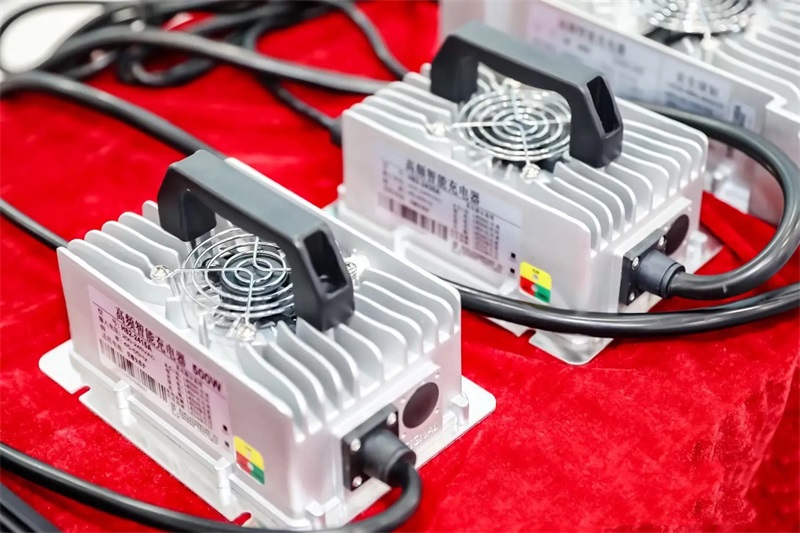
A LiFePO4 battery charger is specifically designed to match the voltage and charging profile of these batteries.
- Nominal cell voltage: 3.2V
- Typical full-charge voltage: ~3.65V per cell
LiFePO4 chargers use the CCCV (Constant Current / Constant Voltage) method:
- Constant Current (CC): Charges the battery rapidly until near full capacity.
- Constant Voltage (CV): Holds a steady voltage to safely complete the charging process.
For instance, a single LiFePO4 cell should not exceed about 3.65V, and a proper charger will limit voltage at this point.
It may sometimes work, but it is not recommended.
Key differences include:
- Lead-acid cells have a 2V nominal voltage vs. 3.2V for LiFePO4.
- Lead-acid chargers often use a float charge stage, which LiFePO4 batteries do not need and may not handle well.
As a result, a lead-acid charger might:
- Stop charging too early.
- Fail to achieve a full charge.
- Increase long-term stress on the battery or BMS.
If the BMS is faulty or poorly designed, using a lead-acid charger could pose a safety risk. For optimal safety, performance, and battery life, a dedicated LiFePO4 charger is strongly advised.
Budget chargers might function, but they carry higher risks. Common problems include:
- Lower-quality components.
- Poor accuracy in voltage and current output.
- Inconsistent build quality.
- Incorrect or misleading specifications.
Given the relatively high value of LiFePO4 batteries, choosing a low-quality charger to save money is not a cost-effective decision.
No. This is unsafe.
Charging voltage must match the battery system precisely. Excessive voltage can:
- Shorten battery lifespan.
- Activate BMS protection repeatedly.
- Cause internal overheating or permanent damage.
While many modern BMS units will interrupt unsafe charging, relying solely on the BMS is not best practice. Always use a charger designed for your specific LiFePO4 battery configuration.
Yes. LiFePO4 batteries can be charged from various sources:
- Grid power
- Solar or wind systems
- Vehicle alternators
However, each power source requires appropriate charge controllers or DC-DC chargers configured for LiFePO4 chemistry. Using incompatible equipment may prevent proper charging or reduce efficiency.
Charging LiFePO4 batteries is largely automated, but understanding the basics remains essential for safety, performance, and long-term reliability.
By selecting the correct charger, operating within the recommended temperature range, and following sound environmental practices, users can fully benefit from LiFePO4 technology and ensure dependable energy storage for years to come.
Contact Person: Miss. Kiki
| WhatsApp : | +8617763224709 |
|---|---|
| Skype : | +8617763224709 |
| WeChat : | +8617763224709 |
| Email : | kiki@lifepo4-battery.com |
